

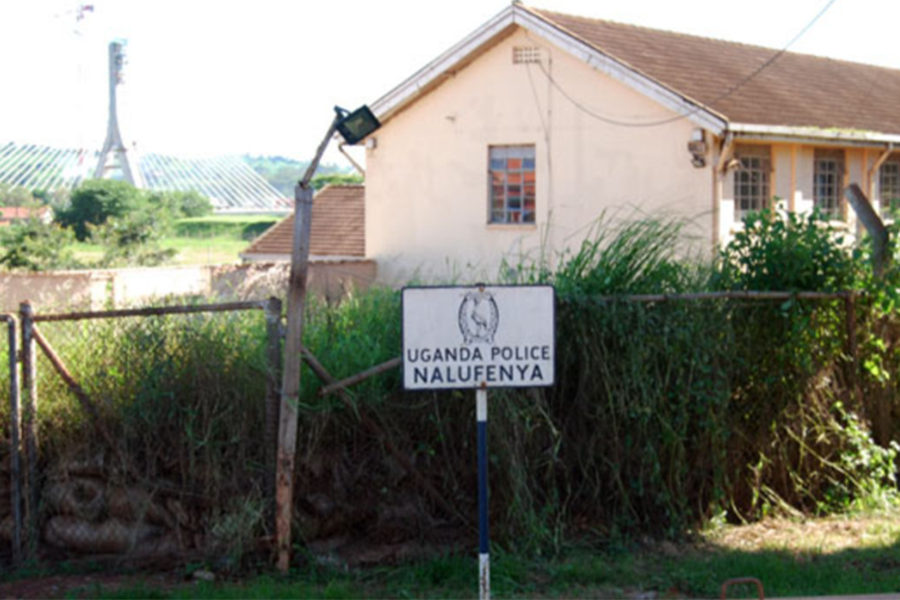
For decades, Nalufenya Police Station has stood at the entrance of Jinja along the Kampala–Jinja Highway, serving as one of the city’s most visible government installations.
Today, however, urban planners, business owners and residents argue that its location is constraining redevelopment of one of Uganda’s most strategic urban gateways.
The growing debate centers on a proposal to relocate the facility to a less central area, freeing up prime land for commercial, residential and tourism development that could transform Jinja’s first impression to visitors arriving from Kampala.
Nalufenya sits on a critical junction linking key routes to the Source of the Nile, the Nile Bridge and Jinja’s industrial corridor.
Under the city’s development framework, much of the surrounding area has been earmarked for commercial and tourism-oriented use.
Urban planners say the current use of the land does not align with that vision.
They argue that high-security installations such as detention facilities, impound yards and restricted-access compounds are incompatible with modern mixed-use development, particularly in zones intended to host hotels, malls and tourism infrastructure.
Traffic congestion has also been cited as a growing concern. The city entrance already experiences bottlenecks during peak hours, and police operations involving detainee transfers and administrative movement are said to add to the pressure at a key entry point into the city.
The redevelopment argument envisions a transformed gateway area that could include hotels, office spaces, retail hubs and public amenities designed to strengthen Jinja’s identity as the “Adventure Capital of East Africa.”
Planners also suggest that a redeveloped site could feature landscaped public spaces and tourism information centres, enhancing the experience for visitors arriving in the city.
Supporters of relocation further argue that the site’s commercial value is significantly underutilised. They say redevelopment could generate higher property tax revenues, business licensing income and investment inflows compared to its current government use.
However, they also acknowledge that Nalufenya plays a longstanding security role and holds historical significance within Uganda’s policing system.
The proposal, therefore, hinges on a trade-off between urban redevelopment and security infrastructure requirements.
Proponents of relocation argue that a new police facility could be built outside the central business district with improved capacity, modern detention facilities and expanded operational space, while freeing up the current site for commercial use.
They point to similar urban planning debates in other Ugandan cities, where government facilities in prime locations have been considered for relocation to ease congestion and unlock land value.
Private investors are reportedly interested in the Nalufenya site, but stakeholders say uncertainty over the police presence has slowed potential deals.
Under the proposed model, relocation would require government coordination between the Uganda Police Force and the Ministry of Internal Affairs, alongside identification of alternative land and financing for a new facility, potentially through a public-private partnership.
Urban planners emphasize that such a shift would require structured consultation, given the security and logistical implications of moving a major police installation.
The Uganda Police Force has not yet issued an official position on the relocation proposal.
For now, Nalufenya remains in place at one of Jinja’s most strategic entry points. But as the city continues to expand and position itself for tourism and industrial growth, pressure is mounting for a rethinking of how prime urban land is utilized.
As one planner put it, the debate is ultimately about identity and opportunity: whether Jinja preserves its current gateway, or reimagines it for a new phase of urban growth.