

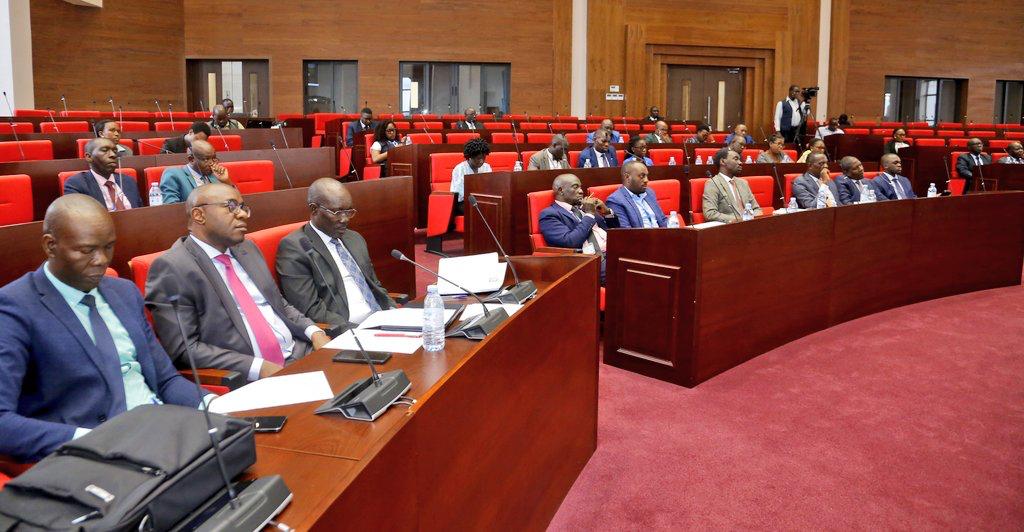
The two-week World Bank mission on the Uganda Intergovernmental Fiscal Transfers Program for Results (UGIFT) Implementation Completion and Results Report concluded last week, marking an important step in assessing progress made under the programme and shaping priorities for future initiatives.
The mission focused on reviewing the implementation of UGIFT 1.0 while also holding technical discussions to advance the design of UGIFT 2.0. In addition, discussions were held on the implementation of the PIM PLUS operation, which aims to strengthen the way government prepares, appraises and implements public investment projects.
The World Bank team, led by Barbara Magezi, assessed the achievements of the USD 500 million UGIFT 1.0 programme and examined lessons learned from its implementation.
During the wrap-up meeting held at the Ministry of Finance, Planning and Economic Development, Acting Director Budget Hannington Ashaba, speaking on behalf of the Permanent Secretary and Secretary to the Treasury (PSST), Dr. Ramathan Ggoobi, said UGIFT has played a pivotal role in strengthening the financing and delivery of critical social services in health, education, water and agriculture in local governments.
Ashaba thanked the World Bank team and Government of Uganda officials for participating in the mission and reflecting on the progress of UGIFT 1.0 as well as the priorities for the proposed UGIFT 2.0 programme.
On the PIM PLUS operation, Ashaba expressed optimism that the initiative, which became effective in February 2026, will help address weaknesses identified in project preparation, planning and execution.
On the proposed UGIFT 2.0 programme, he called for strategies to strengthen financing for social services, particularly in addressing wage, non-wage and development financing.
On behalf of the World Bank, Magezi thanked the government for delivering on UGIFT 1.0 and emphasized the need to apply the same efforts toward the implementation of PIM PLUS.
She noted that critical areas for the delivery of the proposed UGIFT 2.0 include strengthening financing for service delivery, particularly wage and development financing, improving human resource management, strengthening oversight and management of service delivery at both the centre and local governments, ensuring effective allocation and utilisation of the development fund, and supporting job creation and local economic development.