

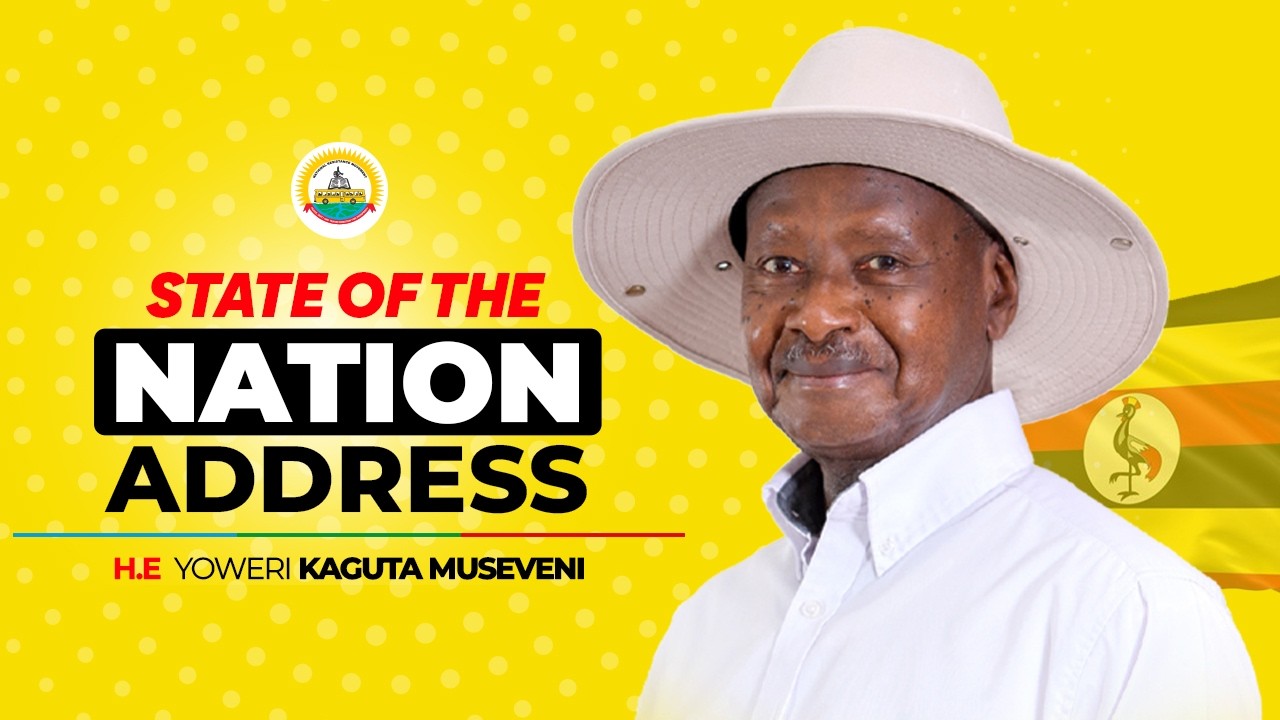
President Museveni has acknowledged that while poverty remains a challenge in Uganda, a growing number of citizens have successfully created wealth and joined the money economy.
Speaking during the State of the Nation Address at Kololo, Museveni said discussions about poverty should also recognize the increasing number of Ugandans who have improved their livelihoods through participation in productive economic activities.
To illustrate his point, Museveni recounted the experience of a Ugandan returnee who was recently seeking to purchase a high-end apartment in Kampala.
According to the President, the returnee was surprised to find that a flat she was interested in purchasing was being sold for USD 1.2 million. Before she could mobilize the funds, the property had already been bought by another Ugandan resident.
The President argued that such examples demonstrate the emergence of a growing middle class and increasing wealth creation among Ugandans.
However, he stressed that the country needs a productive middle class that contributes to national development through sectors such as commercial agriculture, information and communications technology, manufacturing, and other wealth-generating enterprises.
Museveni reflected on his earlier visits to his farm in Kisozi in Gomba district where he said many residents were trapped in subsistence lifestyles and lacked meaningful economic engagement.
The President expressed satisfaction that many of these since embraced commercial agriculture and joined the money economy.
He reiterated his commitment to government programmes aimed at wealth creation, saying he does not want to see communities remaining comfortable with poverty when opportunities for economic transformation exist.
The President’s remarks come as government continues to implement initiatives such as the Parish Development Model (PDM), aimed at increasing household incomes and accelerating Uganda’s socio-economic transformation.
Museveni made a case for Ugandans investing in commercial agriculture as a magic bullet to becoming wealthy.
He however said leaders ought to guide the population on how they can ably make use of government programs to get out of poverty.
He accused some officials of remaining in Kampala despite receiving facilitation intended to enable them to engage with communities in the field.
The President described the dependence on allowances and facilitation as “parasitism” and said the time had come to confront the issue directly.