

President Museveni has issued a strong warning to government officials against receiving allowances without undertaking fieldwork, declaring a tougher stance on accountability and public sector performance.
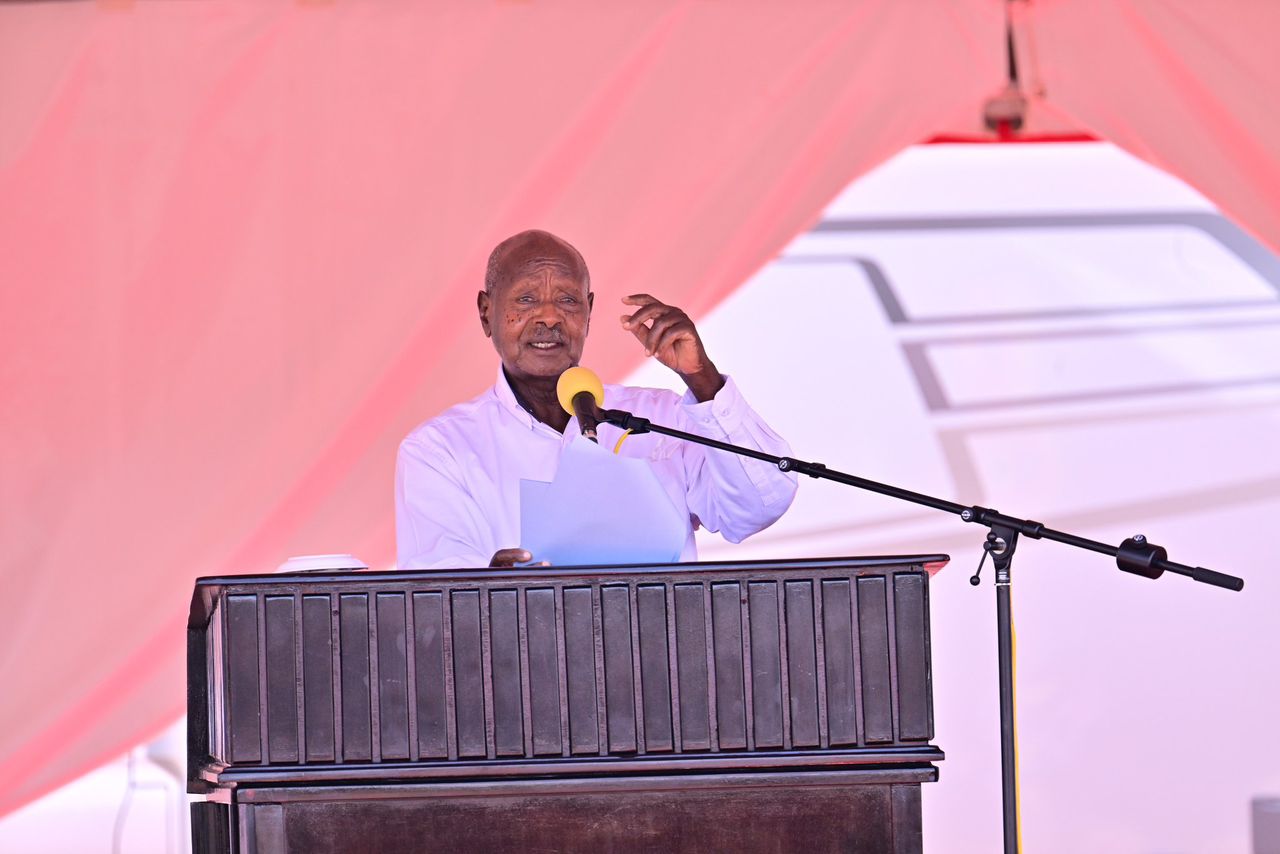
Speaking during the State of the Nation address at Kololo Ceremonial Grounds on Thursday, Museveni criticised officials who remain in Kampala while drawing government field allowances.
Museveni emphasised that the current administration would not tolerate underperformance.
Museveni further warned that leadership carries responsibility and moral consequences.
Museveni referenced earlier government policy debates and agricultural transformation efforts, urging leaders to learn from practical experience.
Museveni added that dairy farming is more efficient for small-scale farmers compared to large-scale beef ranching due to land requirements.
Museveni also highlighted concerns about misuse of government resources and entitlement attitudes among officials.
The President further questioned the need for operational allowances among local leaders.
Museveni cited Uganda’s progress in agro-processing and exports.
According to Museveni, under the Parish Development Model (PDM), Government pledged Shs 100 million per parish annually to lift households out of subsistence farming.
By March 2026, Shs 3.63 trillion had been disbursed, although audit concerns remain.
The 2025/26 budget allocated Shs 1.86 trillion to agro-industrialisation, including irrigation, agro-processing, storage, fertilisers, and extension services.
Government commitments to improve marketing and tourism infrastructure contributed to increased performance, with tourism receipts rising to Shs 5.8 trillion in 2025 and international arrivals reaching 1.64 million.
The government’s push to end raw mineral exports includes development of gold refineries, a tin smelter in Mbarara, and Shs 500 billion allocated to the Uganda National Mining Company.
Plans for a 60,000 barrels-per-day refinery at Kabaale, Hoima, and a refined products pipeline to Mpigi remain pending despite signed agreements.
The East African Crude Oil Pipeline, spanning 1,443 kilometres from Hoima to Tanga, had reached 82 percent completion by April 2026.
The Standard Gauge Railway project, beginning with the 273-kilometre Malaba–Kampala line, has a contractor in place and preparatory works ongoing, but construction has not yet begun.
Road development includes 18 new projects, maintenance works, and strategic bridges such as Ssezibwa, Katonga, Lwera, and Kalandazi, although delays and arrears continue to affect delivery.
Government plans to increase electricity generation capacity from 2,052 megawatts to 12,074 megawatts include projects such as Ayago, Kiba, Oriang, and the Buyende nuclear plant.
However, no additional megawatts from these projects have yet been added to the grid.
The 2025/26 budget allocated Shs 5.87 trillion to health and Shs 5.04 trillion to education, focusing on hospitals, maternity wards, classrooms, seed schools, teachers, and science education.
Progress in these sectors is described as partial, with ongoing implementation.
President Museveni reaffirmed his administration’s focus on productivity, accountability, and economic transformation, while warning public officials against absenteeism and entitlement culture.
He reiterated that government performance will be judged by delivery on the ground rather than office-based reporting or allowances.