

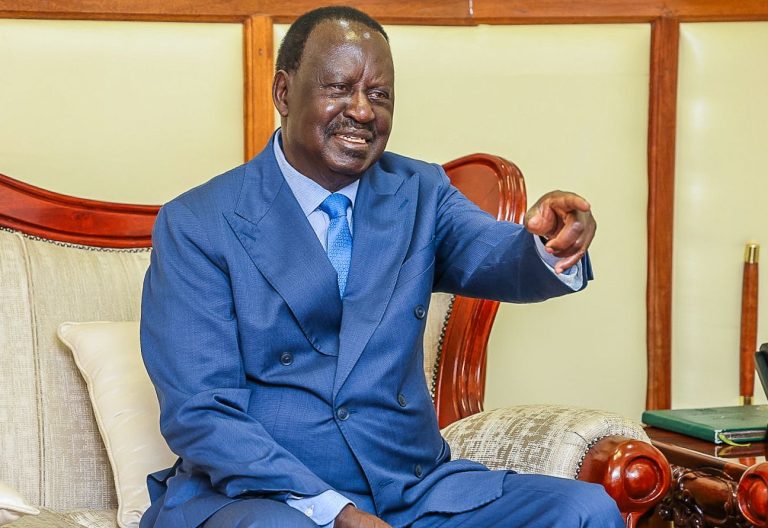
Raila Odinga’s political journey was never conventional. From activist to opposition leader to a statesman engaging with the very powers he once challenged, Odinga’s life in politics has consistently sparked debates across Kenya. Was he a principled leader guided by ideology, or a controversial figure whose decisions bordered on opportunism? To answer, one must examine the pivotal moments where his actions defied expectations, sometimes earning him admiration, other times derision.
The Handshake That Shocked a Nation
Perhaps no event better encapsulates the tension between principle and pragmatism than the now-famous handshake with President Uhuru Kenyatta in March 2018. Once fierce electoral opponents, Odinga’s decision to publicly reconcile and form a cooperative government stunned many. For decades, he had been the face of opposition, a vocal critic of government excesses, corruption, and political marginalization. Critics argued that the handshake undermined the opposition’s integrity, dubbing him a “sell-out” for seemingly abandoning the struggle for accountability.
Yet, supporters claim the move was strategic: Odinga positioned himself to influence national policies, promote stability, and secure reforms that would have been impossible from a purely oppositional stance. The handshake, controversial as it was, reflected a willingness to compromise for potential long-term gains, challenging conventional notions of what principled leadership entails.
Engagements with William Ruto
Raila’s political recalibrations continued after his alliance with Uhuru. His later interactions with William Ruto, especially during the post-2017 political realignments, raised similar debates. Odinga had previously accused Ruto of undermining democratic processes, yet later dialogues suggested collaboration in areas of national interest. These moves prompted questions: Was Odinga prioritizing personal political legacy, or demonstrating the flexibility needed to navigate Kenya’s complex political terrain?
Radical and Hardline Positions
Odinga’s career was also punctuated by moments of uncompromising radicalism. During the 1990s, when Kenya was under a one-party system, Odinga’s activism for multiparty democracy was considered extremist by the establishment. He led protests, faced imprisonment, and defied security forces to demand political reforms—a stance that, at the time, appeared reckless yet ultimately reshaped Kenya’s political framework.
Similarly, the 2007 post-election crisis exposed Odinga’s willingness to take hardline positions. His insistence on challenging the declared election results, despite mounting violence, was both lauded as courageous and criticized as destabilizing. Odinga’s approach reflected a deep commitment to fairness and accountability but also highlighted the thin line between principled resistance and perceived extremism in volatile contexts.
The Fine Line Between Pragmatism and Opportunism
Many of Odinga’s decisions—alliances with former rivals, strategic compromises, and occasional radical stances—invite scrutiny. Was the handshake with Uhuru a betrayal of principles, or a pragmatic move to implement reforms? Was engagement with Ruto a necessary step for political relevance, or a lapse in ideological consistency? The truth may lie somewhere in between. Odinga’s leadership exemplified the challenge of balancing ideals with realpolitik, navigating a political landscape where strict adherence to principle can sometimes render one ineffective.
Impact and Legacy
Regardless of interpretation, Odinga’s life reshaped Kenya. His activism catalyzed democratic reforms, his leadership bridged ethnic and political divides, and his willingness to take risks—whether perceived as radical or controversial—left a permanent mark on the nation. Yet, his career also leaves lingering questions about the costs of compromise and the limits of principled politics in a competitive, often polarized system.
In the end, Raila Odinga’s story is not one that fits neatly into the categories of “controversial” or “principled.” It is the story of a leader navigating an imperfect system with courage, calculation, and a willingness to confront both his critics and his own conscience. For Kenya, the debate over his legacy is far from settled—and perhaps that, in itself, is the enduring lesson of his life in politics: leadership is complex, and the path of principle is often entangled with controversy