

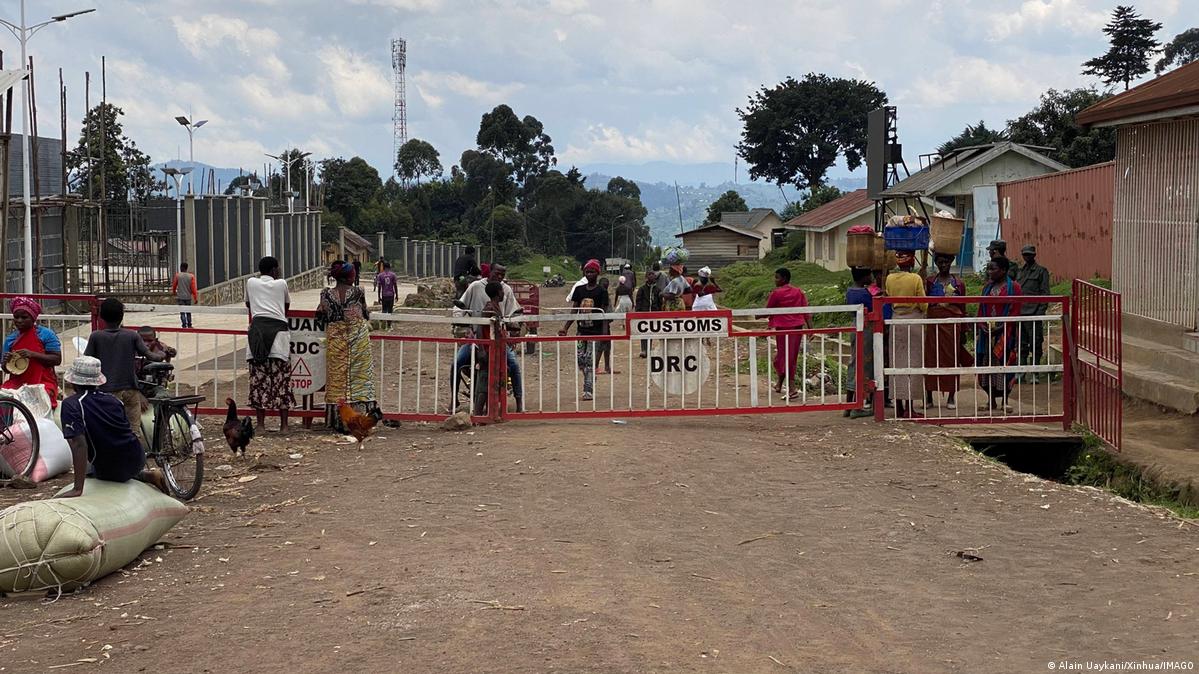
Trade activity at the Bunagana border post between Uganda and the Democratic Republic of Congo (DRC) remains subdued months after its official reopening, with local leaders and traders blaming continued instability in eastern Congo and repeated refugee influxes for crippling the local economy.
The Bunagana border, located in Kisoro District, was reopened on July 10, 2025, after a four-year closure triggered by fighting involving the March 23 Movement (M23) in eastern DR Congo.
The reopening was expected to restore vibrant cross-border commerce, particularly with areas under M23 control. However, business leaders say trade volumes have yet to recover.
Hashaka James, Chairperson of the Business Community in Bunagana Town Council, said the town’s economy has significantly declined due to the prolonged conflict in neighbouring DRC.
He explained that before the war, cross-border trade was at its peak, with goods such as cement, beverages, and foodstuffs exported in large quantities to Congo. Currently, he said, only a few individuals are engaged in limited trade.
Hashaka noted that many traders had secured bank loans during the boom period but have since struggled to repay them following the collapse of cross-border commerce.
Others, he added, have failed to meet tax obligations and pay rent for their business premises.
He also raised concerns about the economic burden associated with refugee influxes, saying Bunagana has often served as a major entry point for Congolese fleeing violence.
John Semahore, LC3 Councillor for Bunagana Ward, said that during periods of refugee inflow, local residents shared essential household items and food with displaced people, while others had their crops destroyed.
He said affected families have never been compensated and are now facing severe hardship.
He urged the two fighting parties in eastern DR Congo to pursue dialogue as a lasting solution to the crisis.
At the border, some Congolese traders expressed frustration over what they described as high taxes on goods, arguing that the current trading environment favours wealthy businesspeople while marginalising small-scale traders.
Kisoro District Deputy Resident District Commissioner Dan Ndikumwami acknowledged that business at the Bunagana border remains sluggish due to the ongoing conflict in DRC. However, he urged traders to remain patient, saying the government is considering possible interventions.
Ndikumwami said other government services at the border, including offices of the Uganda Revenue Authority (URA), are fully operational, although they are experiencing low traffic due to reduced trade activity.