

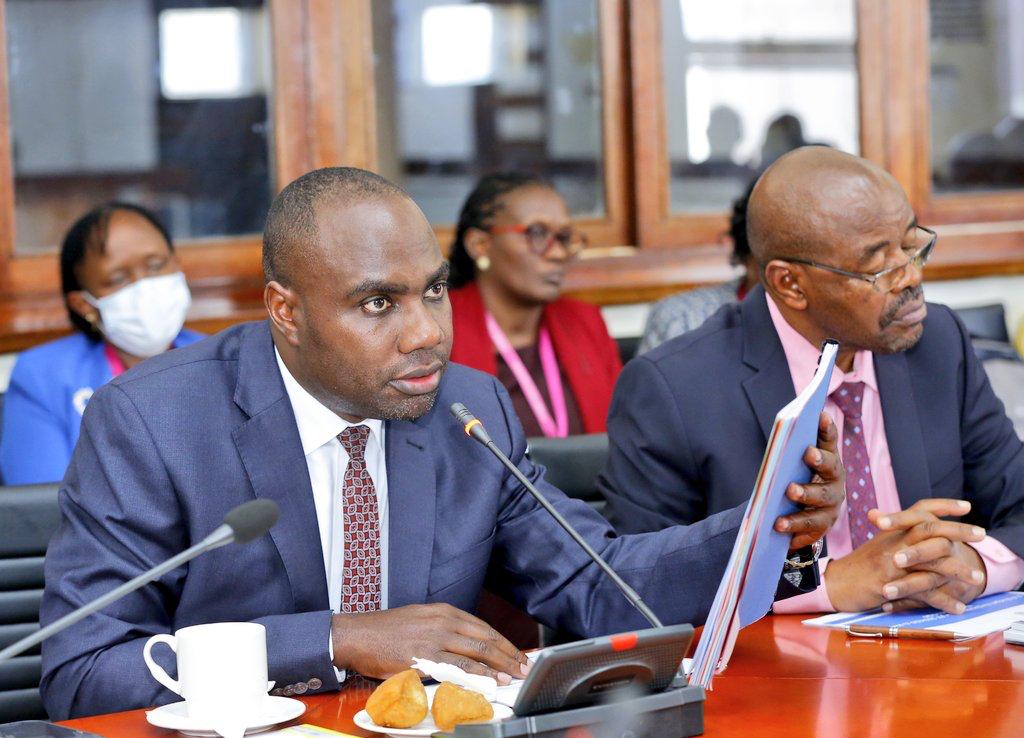
A tense session unfolded before Parliament’s Finance Committee after officials from the Ministry of Finance and the Uganda Revenue Authority (URA) presented conflicting positions on Uganda’s revenue projections for the 2026/2027 financial year.
The meeting, convened to review URA’s Ministerial Policy Statement, took a dramatic turn when State Minister for Finance (General Duties) Henry Musasizi asked legislators to disregard figures that had just been presented by the tax body.
Acting URA Commissioner General Abel Kagumire told the committee that the authority is targeting Shs41.513 trillion in revenue for the next financial year, up from Shs37.277 trillion in the current period.
However, Musasizi quickly distanced the Ministry from the figure, saying it was still subject to change as consultations continue.
The development sparked an immediate backlash, with Kira Municipality MP Ibrahim Ssemujju Nganda questioning the credibility of the presentation and moving to halt proceedings.
Despite the disagreement, URA proceeded to present its internal budget of Shs877.396 billion required to deliver on its targets. The proposed expenditure includes Shs400 billion for wages, Shs412 billion for non-wage items, and Shs64.7 billion for development.
Lawmakers, however, raised concerns over what they described as excessive spending on non-essential items. Ssemujju criticised allocations to workshops, welfare, and other administrative costs, while also questioning why URA continues to spend on rented office space despite having a major headquarters in Nakawa.
The session grew more heated when Otuke County MP Paul Omara pressed the Ministry to clarify reports of a proposed increase in Pay As You Earn (PAYE) tax to 40 percent, warning that such a move could have serious economic consequences.
In response, Musasizi linked the pressure for higher revenue collection to the need to improve Uganda’s tax-to-GDP ratio but acknowledged existing challenges within the system.
The standoff highlighted growing tensions within government over revenue mobilisation strategies, as Parliament intensifies scrutiny of budget assumptions ahead of the new financial year.