

The anxiety spreading across western Uganda
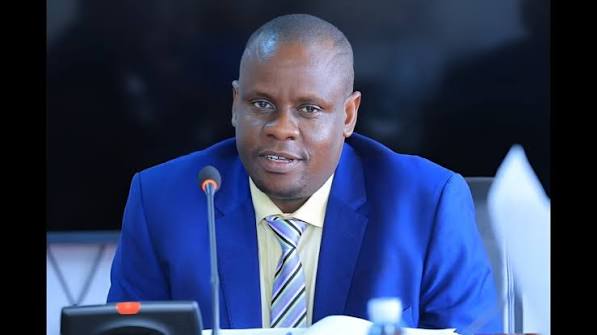
The anti-corruption inspections led by Local Government Minister Balaam Barugahara have introduced a new kind of pressure into Uganda’s local-government system: officials increasingly cannot assume that project files, payroll records and financial accounts will only be examined during scheduled audits.
Barugahara has made surprise physical inspection a central feature of his approach. He has defended the method as necessary because government officials should be accountable for what actually exists on the ground, rather than what appears in reports. His inspections have targeted roads, schools, health facilities, garbage management and other public projects.
That approach has won considerable public attention because it addresses a frustration that many Ugandans have expressed for years: a government project can look perfectly satisfactory on paper while citizens experience something completely different on the ground.
For districts in western Uganda that have not yet received a ministerial inspection, therefore, the issue is no longer simply whether Balaam will come. It is whether local authorities are prepared for the possibility that every road, payroll, procurement file, health centre, school enrolment figure and piece of government equipment could become the subject of an unscheduled inspection.
Ibanda: the road question could become a major test
Ibanda is particularly interesting because the condition of the Ibanda–Kitagwenda road has already attracted public concern.
A September 2025 report documented serious deterioration on the 37.8-kilometre Ibanda–Kitagwenda road, particularly the section running through Kagongo. Residents said the road’s poor condition was affecting education and healthcare access, while transport costs had increased substantially. The road serves 13 educational institutions and Uganda Martyrs Hospital, Kagongo.
That provides a potentially important accountability trail.
If reports that Ministry of Works equipment has been seen working around the Ibanda–Kagongo road are accurate, several straightforward questions arise:
- Who owns the equipment?
- Under whose authority was it deployed?
- Which road or project was it assigned to?
- What budget financed the work?
- What was the original scope of the intervention?
- Who inspected and certified previous works?
- Why has the road deteriorated despite repeated interventions?
- What is the current maintenance plan?
- Are there procurement, supervision or certification documents supporting the expenditure?
Those are precisely the kinds of questions that can turn a political inspection into a useful audit exercise.
The important distinction is that the presence of government equipment on a road does not, by itself, establish wrongdoing. It should instead trigger verification of ownership, deployment records, work orders and expenditure.
Kitagwenda: there is already a history worth examining
Kitagwenda would arguably deserve particular attention because the district has previously faced documented financial and accountability controversies.
In 2021, Uganda Radio Network reported that the district’s Chief Finance Officer was interdicted after failing to account for funds, including more than Shs300 million connected to projects and other district activities.
Even more significantly, CID investigated allegations concerning Shs200 million meant for maintenance of a one-kilometre tarmac road in Kitagwenda Town Council during the 2020/21 financial year. The investigation sought accountability records from senior district officials.
And Kitagwenda has had a more recent corruption-related case: its former district chairperson, Ismail Mushemeza, was arrested by the State House Anti-Corruption Unit in 2025 over allegations involving the sale of non-existent district jobs. He was subsequently charged and remanded.
These matters do not mean that current Kitagwenda officials are culpable.
But they demonstrate why an inspection of the district could reasonably look beyond personalities and examine whether previous accountability problems have been permanently resolved.
Kamwenge: projects and service delivery under the microscope
Kamwenge also has issues that could attract attention during a thorough inspection.
In June 2026, district leaders were reportedly seeking termination of a contractor working on two seed-school projects after construction progress remained below 25 percent despite the contractual completion period having expired. The projects were funded under the World Bank-supported Uganda Secondary Education Expansion Project.
That raises another set of questions relevant to a Balaam-style inspection:
How much money has been released? How much work has actually been completed? Who certified the work? What explains the delay? Has the contractor been paid in proportion to actual progress? And what has the district’s technical team been doing to enforce the contract?
Those questions are more valuable than simply arresting somebody at the site. They establish the chain of responsibility from procurement to supervision, payment and certification.
Kamwenge and Kitagwenda also have a history of complicated local-government issues around the Dura quarry, including disputes over boundaries and revenue. Those disputes demonstrate that local-government accountability is not limited to conventional corruption cases; management of public assets and locally generated revenue can be equally important.
The wider Tooro sub-region
If the minister’s inspection campaign moves westward, the implications would extend beyond Kamwenge and Kitagwenda to districts such as Kabarole, Bunyangabu, Kyenjojo, Kyegegwa, Ntoroko and Kibaale-area local governments, as well as Fort Portal City.
Fort Portal City has already received attention from Barugahara. During a July 2026 community engagement at Kabundaire Market, he ordered city leadership to take disciplinary action over garbage-management failures and questioned the use of public resources. He also raised concerns about health and education service delivery.
That is significant because it shows that the inspection campaign is not necessarily confined to dramatic corruption allegations. Basic service delivery itself can become an accountability issue.
A comprehensive Tooro inspection could therefore examine:
- district and municipal road maintenance;
- abandoned or delayed capital projects;
- health-centre staffing and absenteeism;
- school enrolment versus actual pupil numbers;
- procurement and payment records;
- market revenue and garbage-management contracts;
- use of district road equipment;
- fuel consumption and vehicle logbooks;
- payroll and ghost-worker risks;
- PDM and other government programme expenditures;
- land and property belonging to local governments;
- engineering supervision and certification of completed works.
The unanswered question for Ankole
The same logic applies to Ibanda, Rubirizi, Kazo, Kiruhura, Rwampara and Ntungamo.
The most interesting consequence of the Balaam inspections may therefore be psychological rather than political. Once officials believe that an inspection can happen without advance notice, the incentive changes. A district engineer cannot simply prepare for the annual audit; a head teacher cannot rely solely on the enrolment figure submitted to headquarters; and a health facility cannot assume that the payroll will never be compared with the people physically present at work.
But the campaign will ultimately be judged by what happens after the cameras leave.
An arrest is not the same thing as a conviction. An interdiction is not proof of guilt. A ministerial accusation is not a completed technical audit. And a visibly poor road does not automatically prove that a particular engineer stole money.
The strongest version of the campaign would therefore combine Balaam’s surprise inspections with formal audits, engineering assessments, procurement reviews, recovery of public funds where wrongdoing is proved, disciplinary proceedings and prosecution where evidence supports criminal charges.
That would answer the criticism that the inspections risk becoming public spectacles while preserving their strongest feature: taking government accountability out of offices and onto the ground where citizens can actually see the results. The concern about due process has already been raised publicly by professional engineers and other commentators.
What western Uganda should be watching
The real story may therefore be bigger than whether Balaam Barugahara physically visits a particular district.
The question is whether his campaign will force local governments across Ankole and Tooro to reconcile three things that have too often existed separately: what was budgeted, what was reported and what actually exists on the ground.
If the minister eventually arrives in Ibanda, for example, the Ibanda–Kagongo road would be an obvious case study—not because the presence of cracks automatically proves corruption, but because its documented deterioration provides a legitimate basis for asking how maintenance money has been spent and how works have been supervised.
Likewise, Kitagwenda’s historical road-fund investigations, Kamwenge’s delayed school projects, and Fort Portal City’s service-delivery concerns provide concrete examples of the kinds of issues that could be subjected to scrutiny.
So the “sleepless nights” in districts that have not yet been visited should perhaps be understood differently: if public money has been properly accounted for and projects have been properly executed, an unannounced inspection should be an opportunity to demonstrate that—not something to fear.
And if the minister does eventually turn up, western Uganda’s citizens will probably be less interested in the drama of arrests than in one simple question:
After Balaam leaves, will the road be fixed, the missing money recovered, the absentee worker accounted for and the service actually delivered?